MIDTOWN PUBLIC INFRASTRUCTURE TIF DISTRICT
Partnering For Progress
The Midtown Public Infrastructure TIF will demonstrate how strategic public investment can support arts-based community development and create a national destination in St. Louis.

The Goals
- a more walkable and bike‑friendly street network
- stronger connections between key destinations and institutions
- a public realm that supports community events, outdoor activity, and local culture
- infrastructure that attracts and supports future retail, residential, and mixed‑use development
- a cohesive identity for Midtown grounded in accessibility, creativity, and community benefit
Overview
Midtown St. Louis has experienced significant growth over the past decade, driven by arts investment, institutional expansion, and new private development. Continued progress depends on modern, reliable public infrastructure.
The Midtown Public Infrastructure TIF is a funding mechanism designed to support infrastructure improvements within a defined district. These improvements help ensure the area can safely and sustainably accommodate future growth, attract additional investment, and enhance quality of life for residents, businesses, and visitors.
This page provides an overview of the proposed district, the types of infrastructure improvements being considered, and how the program is structured.
What Is the Midtown Public Infrastructure TIF?
A Tax Increment Financing (TIF) district is a public financing tool used to support infrastructure improvements within a defined area. As new development occurs and property values increase, a portion of the incremental tax revenue generated within the district can be used to fund eligible public improvements.
The Midtown Public Infrastructure TIF is focused specifically on infrastructure. It is intended to support improvements that enable continued development and strengthen the district’s long-term stability.
These improvements are designed to benefit the broader Midtown area by supporting safer streets, improved utilities, and enhanced public spaces.
Why Infrastructure Investment Is Needed
Midtown has seen substantial public and private investment. However, portions of the district rely on aging infrastructure systems that were not designed to support current and future levels of activity.
Strategic infrastructure improvements can help:
- Support continued private development
- Improve safety and accessibility
- Modernize utilities and public systems
- Enhance public spaces
- Strengthen connectivity within the district
These improvements are intended to support long-term growth while maintaining Midtown’s role as a regional destination for arts, culture, and innovation.
TIF District Boundary
The Midtown Public Infrastructure TIF covers a defined area within Midtown St. Louis. The map below outlines the proposed district boundary.
This TIF...
- covers ~119 acres
- includes a wide range of underutilized or undeveloped parcels
- covers portions of Covenant Blu-Grand Center and Midtown
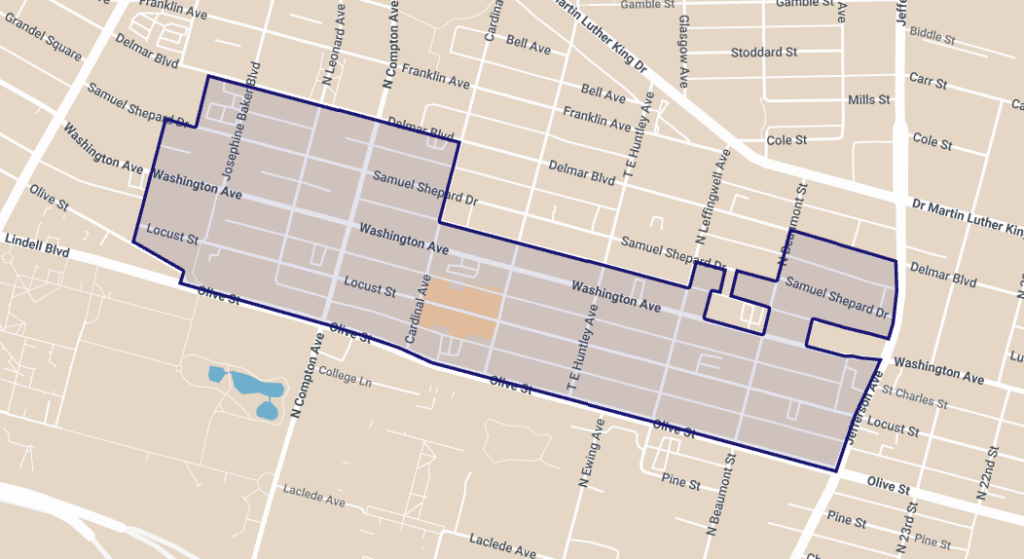
* 3010 Locust, 3141-3147 Locust, 3144 Locust are NOT a part of this TIF District as they are already included in an existing district.
Types of Improvements Under Consideration
The TIF is focused on public infrastructure that supports safety, accessibility, and continued investment in Midtown.
- Lighting improvements
- Street and pedestrian enhancements
- Traffic and safety measures
- Stormwater and utility upgrades
- Public gathering spaces
- Infrastructure supporting future development
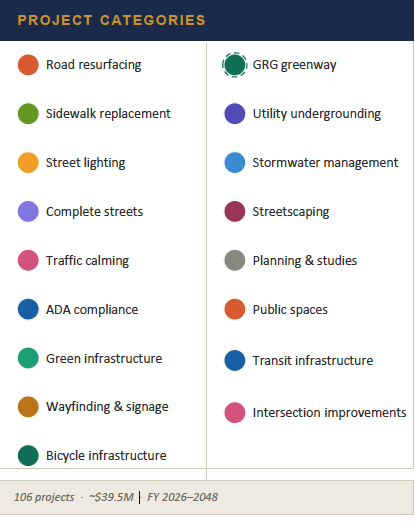
Possible Projects Map
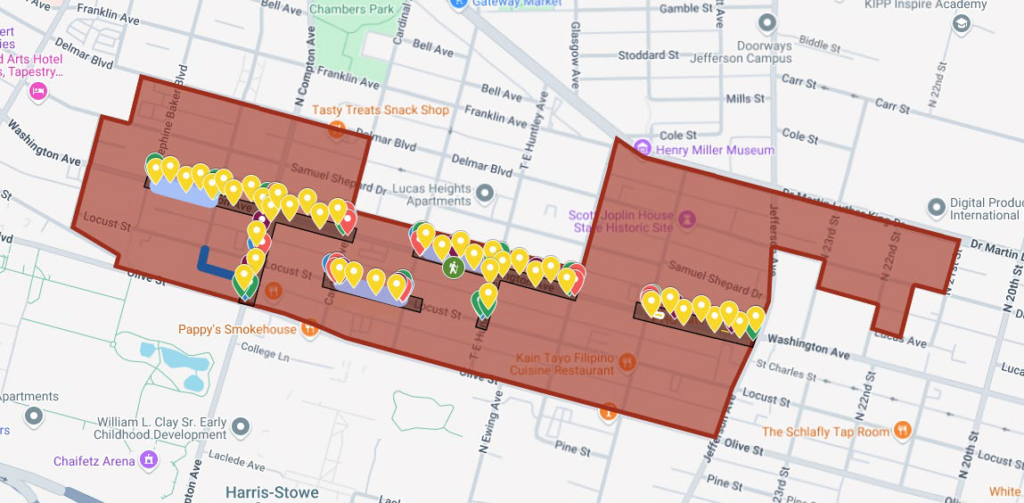
Legend
- Crosswalk
- Decorative Planter
- ADA Sidewalk Ramp
- Speedhump
- Pedestrian Light
- Public Park Installation
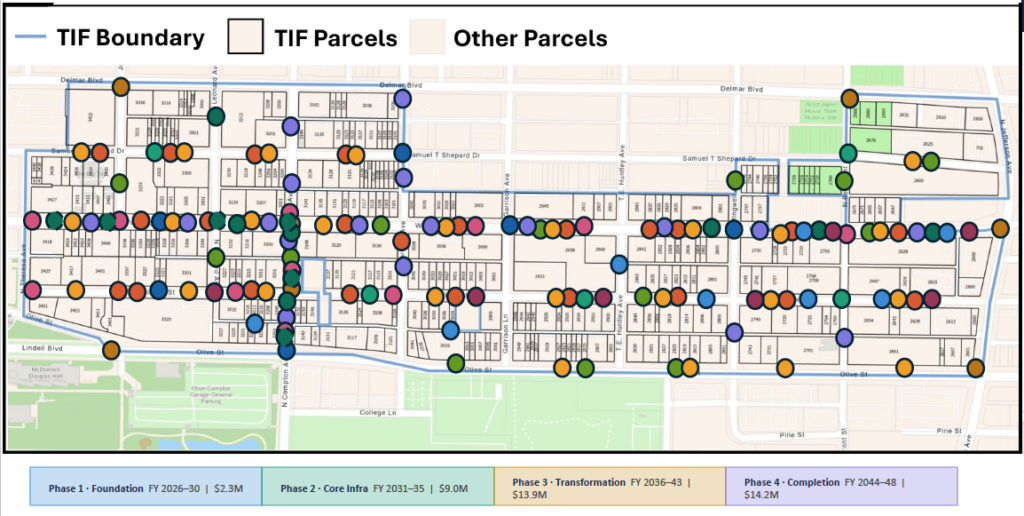
Legend
Projected Financial Impact
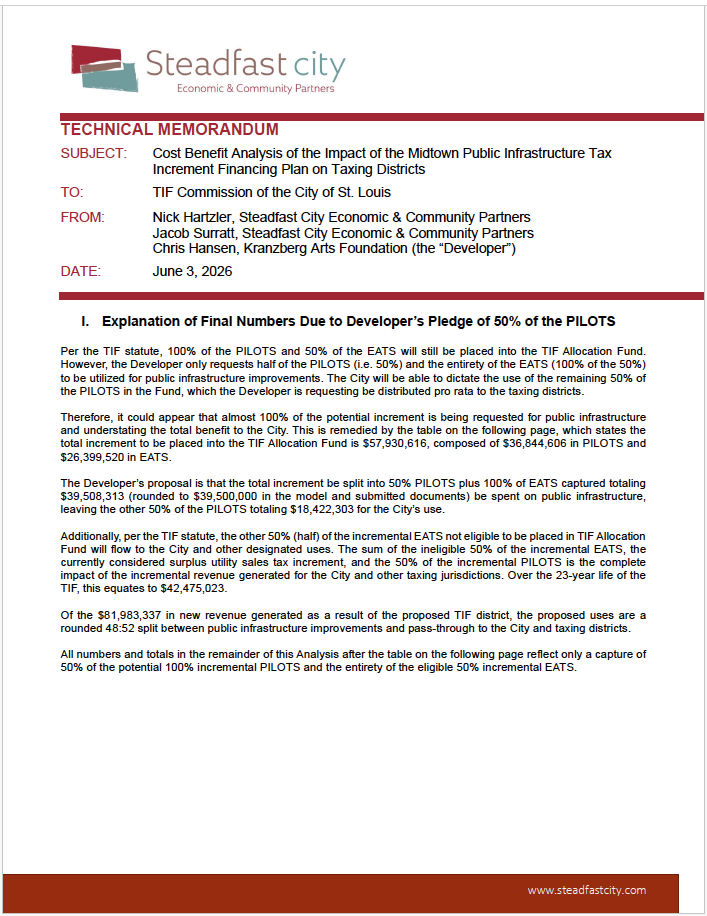
Infrastructure investments are intended to support continued development and increase overall tax revenue within the district over time. As new development occurs and property values grow, the incremental tax revenue generated within the TIF district can be used to fund eligible improvements.
The goal is to support infrastructure that enables long-term economic growth while benefiting taxing jurisdictions and the broader community.
estimate of anticipated project development
increase in total tax payments to taxing jurisdictions over 23 years

Governance and Oversight
The Midtown Public Infrastructure TIF follows established public processes and oversight requirements. Proposed projects and expenditures are subject to review and approval through appropriate public bodies and administrative procedures.
The program is intended to operate transparently and in coordination with local agencies, stakeholders, and community partners.
Supporting documents related to the district and application are available below.
4 Zone-Based Advisory Committees
Advisory Committees are charged with assessing the needs in their zone and prioritizing potential projects and recommendations for the funding, as well as evaluating the impact of funds used. Advisory Committees can have 3-9 members, serving on staggered terms, and will meet at least once a year publicly.
The Governing Board
The Governing Board is responsible for assessing potential public infrastructure projects, reviewing the priorities and recommendations of Zone-Based Advisory Committees, selecting projects on an annual basis, and overseeing financial management and project completion.
Learn More
1. Why a public improvement TIF?
2. Does a TIF raise taxes on existing property owners, residents, or visitors?
3. What are the unique features of the TIF?
4. What is the area covered by the TIF?
5. How much revenue will the TIF generate?
6. What is the TIF’s effect on existing Community Improvement Districts (CIDs) and Special Business Districts (SBDs)?
The TIF will have no effect on CID or SBD revenue.
7. Can specific properties be carved out of the TIF? Why would they be carved out from the TIF area?
8. How will the TIF be governed?
9. How will the Governing Board prioritize projects for TIF funding?
The Governing Board will assess recommendations from the Zone-Based Committees, other relevant input and plans, and available resources to prioritize projects on a regular basis.
10. Where will initial resources be focused?
Want to get involved?